

An insane amount of interesting research difficult to digest in just a few days if not for the nice wine and fine Italian food:
- Pepijn explained which mechanisms are relevant in the morphodynamics of side channels. Interestingly, his first paper was accepted during the conference. The editor must have been touched.
- The technological advances came from Gonzalo, who showed what drones can do for rivers for his project about natural Bank erosion processes.
- The audience of Jasper was fascinated when learning about an innovative concept to explain the formation of very tight and relatively fixed bends in a Dutch peat-filled valley. Not only power matters!
- Tjitske showed progress results of her project about the backwater effects of river interventions to restore streams such as the placement of wood in low-land rivers.
- Liselot showed first results of her project on Numerical Morphodynamic modelling that if you want to assess the equilibrium state of a river there is no need to run long simulations. It seems that we have been waisting computational time!
- Timo presented in the session on bars and mixed sediment processes together with some of the greatest scientists in the field. For his experiment with a line laser scanner tracking the bedforms in a laboratory flume, he uses polystyrene —a light-weight sediment— instead of sand and he has achieved dynamic similarity for his physical scale model.
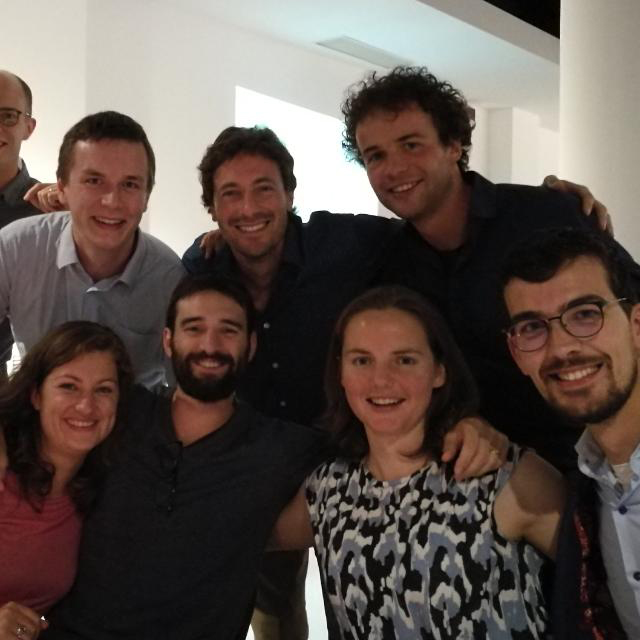 RiverCare researchers at the conference venue.
Eventually, Victor showed in his publication “Ill-posedness in modeling mixed sediment river morphodynamics” that, as Metallica would say, nothing else matters if your equations are wrong.
Related projects






Last modified: 13/12/2019